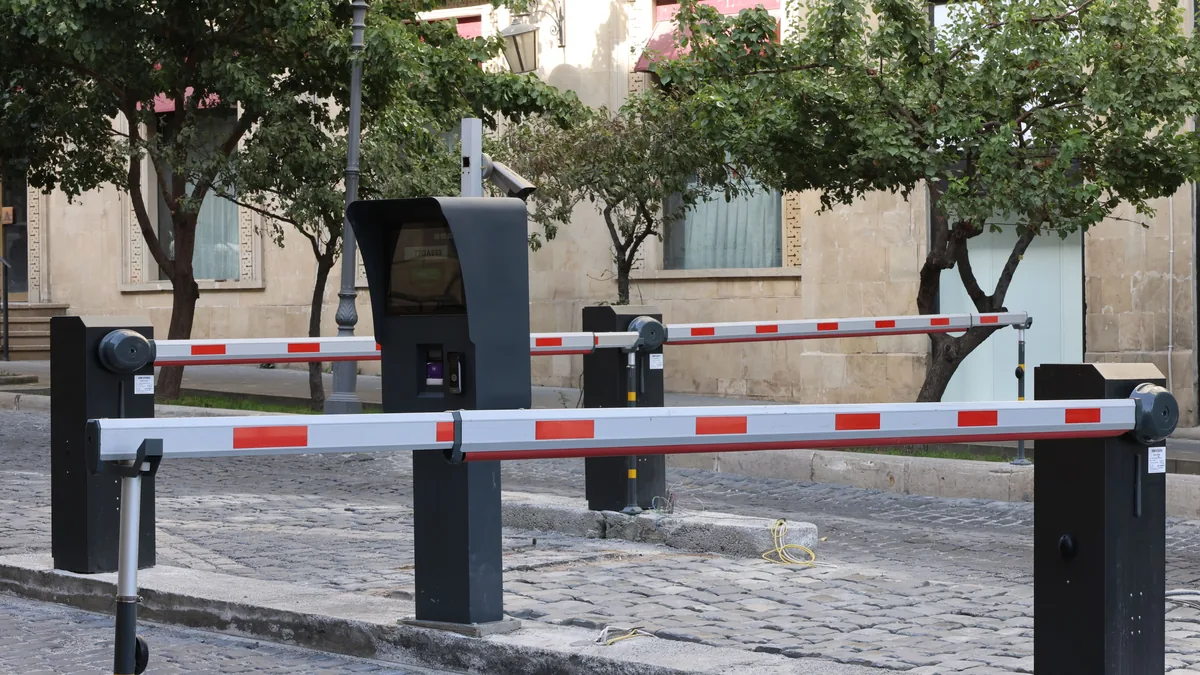


At rush hour in a manually operated gated community, every vehicle stops, the guard walks over, asks, checks a list or fills a logbook, and only then raises the barrier. Multiplied by hundreds of vehicles a day, friction piles up: queues, frustrated residents, and records nobody can query later. ANPR (Automatic Number Plate Recognition) flips that equation: the system reads the plate in a fraction of a second, validates it against the authorized list, and opens the barrier without stopping the vehicle.
Key points
- ANPR reads and validates a plate in milliseconds, day or night
- Visitors register their plate right when they receive the invitation: they just drive in
- Residents get a real-time notification for every access, their own vehicles and their guests
How it works: the 4 steps
- Capture. A purpose-built camera images the plate — lens, angle and infrared illumination calibrated for reflective plates.
- Localization. Software finds the plate inside the image, isolating it from windshields and headlights.
- Reading (OCR). An optical engine turns the image into text.
- Validation. The text is checked against residents, authorized visitors and alert lists. The result triggers the action: open the barrier, issue a temporary pass, or raise an alert.
Frictionless access, step by step
For residents, the experience is transparent: the system recognizes the plate and the barrier opens without stopping. For visitors, the flow starts long before the gate: when the resident sends the invitation from the app, the visitor registers their own plate from their phone at that moment — not at the entrance, not with cars queued behind. On arrival, the camera reads the plate, the system matches it to the invitation, and the barrier opens.
And in both cases, the resident receives a real-time notification of every access: their own vehicles coming and going, and every visitor authorized under their name.
The real cost of friction
Manual operation doesn't just create queues: it burns time nobody counts. Simple math: if validating a vehicle takes about 45 seconds and a mid-size access processes 100 vehicles at rush hour, the entrance accumulates over an hour of total waiting every day. With automatic reading, those 45 seconds drop below 3: the vehicle never even stops.
FAQ
Does plate recognition work at night?
Yes. ANPR cameras include infrared illumination designed for reflective plate material, so reading is equally reliable at any hour.
How do visitors get in?
The resident sends the invitation from the app and the visitor registers their plate from their own phone upon receiving it. On arrival the camera recognizes it and the gate opens without stopping. High-traffic accesses can also add self-registration kiosks.
Will I know who enters my home?
Yes. GateGuard sends the resident a notification for every access: their own vehicles and all their authorized visitors, in real time.
Can an access run with no staffed gatehouse?
Yes. GateGuard Sin Guardias runs accesses 24/7 fully autonomously with plate recognition and QR: it validates, records and alerts with no personnel at the gate. Communities that keep a gatehouse use the system to automate validation while staff focus on exceptions and resident service.
Conclusion
Plate recognition turns the slowest point of a gated community — vehicle access — into the fastest and best documented. With millisecond reads, visitors arriving pre-authorized from their invitation, and real-time notifications on every access, community entrances can be as smooth as they are automatic. GateGuard has been proving it for over 10 years and 150 deployments.